A Swiss Modernist Painter
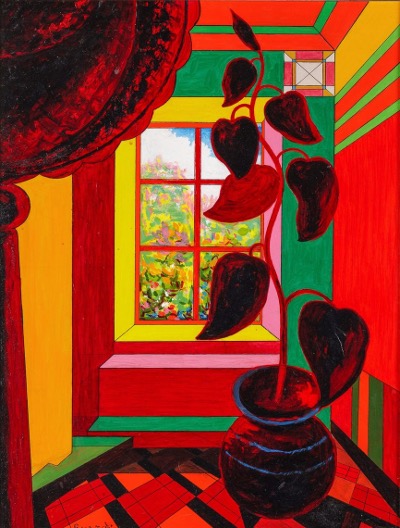
In this video, we discuss the painting Intérieur and make a brief comparison with the painting Phoebus. It is a still life where André Evard’s lyrical and constructivist styles intersect.
For the Swiss artist André Evard (1876-1972), nature and landscape were the greatest source of inspiration. This motif runs through his entire artistic oeuvre and has been interpreted by him both figuratively and abstractly.
The Swiss artist André Evard (1876-1972) is considered a pioneer of Swiss Modernism. His hometown of La-Chaux-de-Fonds was a major source of inspiration for his art throughout his life. He dedicated numerous interpretations particularly to the motifs of trees and sunrises and sunsets.
In this episode, we discuss one of the main motifs in André Evard’s oeuvre: Sunset, 1954.
In this episode, we take a closer look at the 1932 work “Construction” by Swiss artist André Evard.
An early work by Swiss artist André Evard, painted in 1917. The vibrant colors of the spring landscape are perfectly suited to the impasto oil paints.
André Evard’s 1913 self-portrait illustrates the Swiss artist’s fascinating transition from figurative painting toward an abstracted style.
In this video, we present a key work by André Evard, which illustrates the fascinating developmental history from figurative pre-modernism to an abstract style of modern art.
The Swiss painter and draftsman André Evard (1876–1972) was one of the first artists to work non-figuratively and is therefore considered a quiet pioneer of Swiss modernism. Quiet because Evard spoke out against commercialism and triviality throughout his life. He lived for art and innovation, which is why a wide variety of references and styles can be found within his œuvre.