



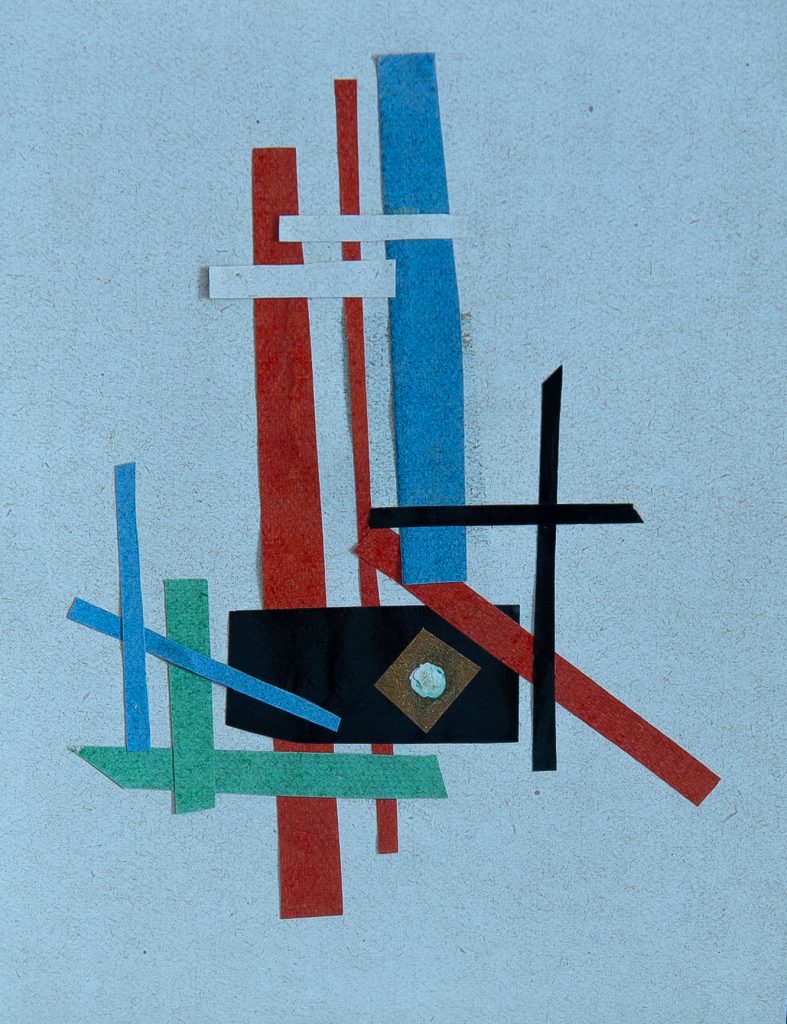
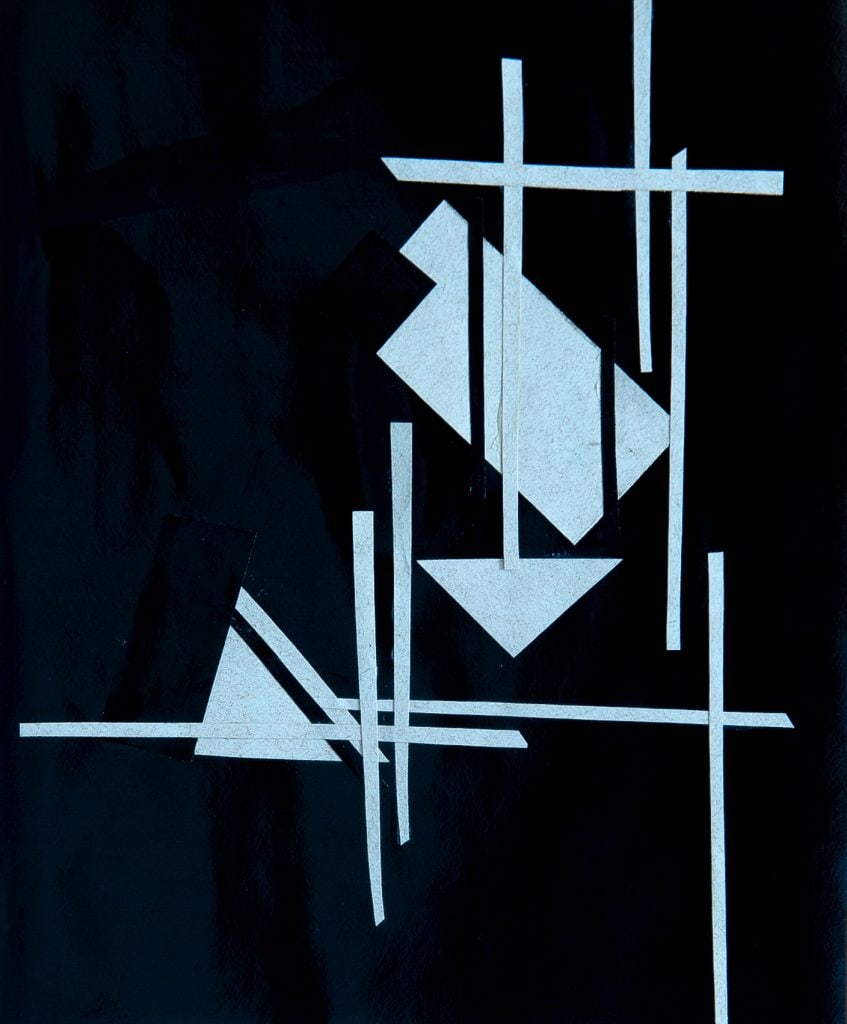
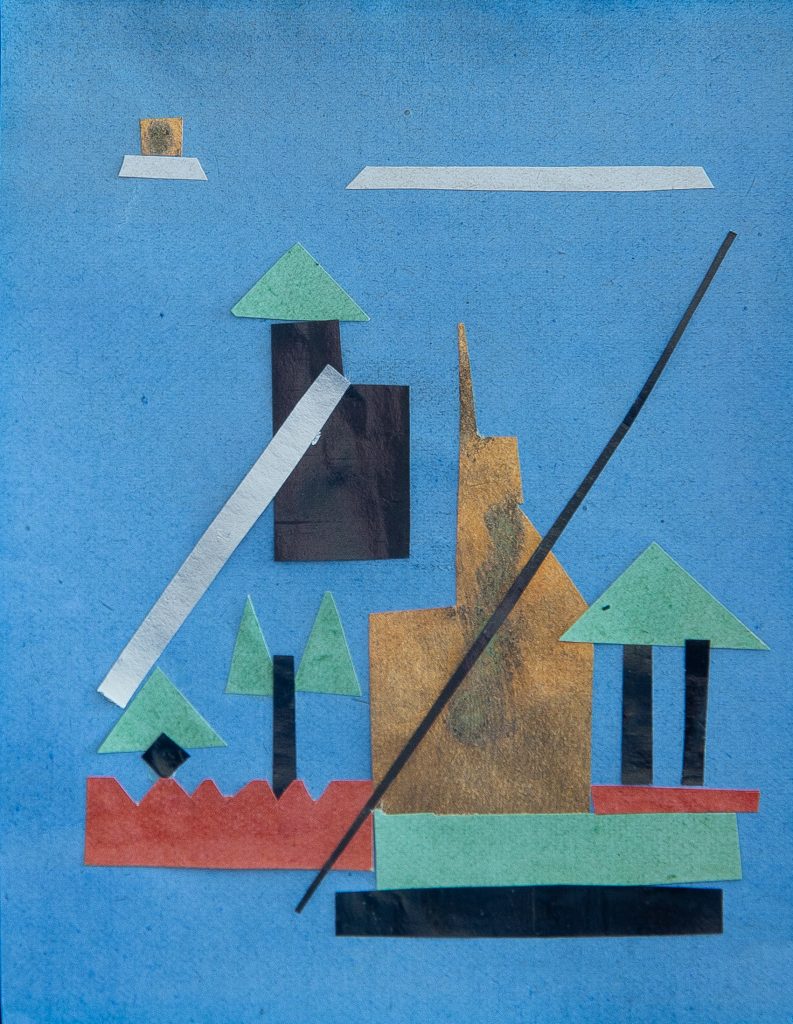
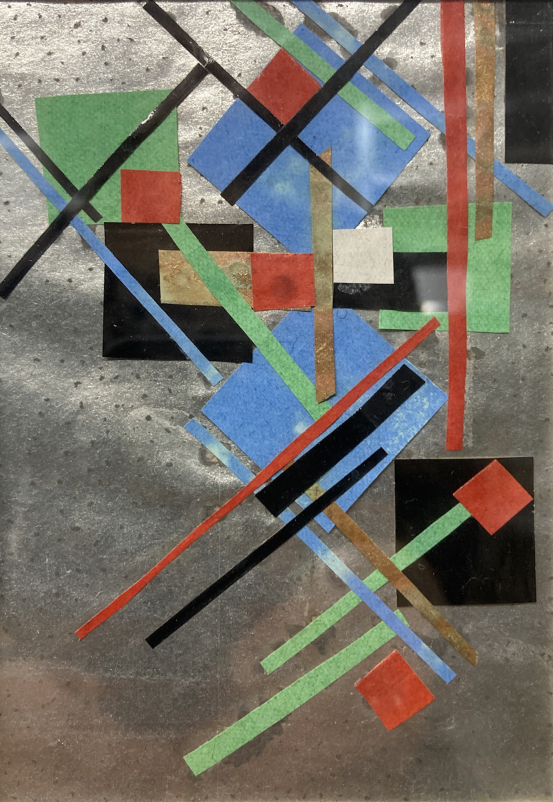
Around 1930, André Evard created a series of small-format collages consisting of carefully arranged rectangles, triangles, and L-shaped elements. In these constructive compositions, the artist tested the effect of geometric shapes and color contrasts within a limited format. The collages served as an experimental field for questions of balance, rhythm, and spatial effect—themes that significantly shaped his later work.
These works form the conceptual foundation for the 1932 series “Composition abstraite,” in which Evard continued the formal principles developed in the collages through oil painting. By reducing elements to simple geometric shapes and clearly defined areas of color, the collages illustrate Evard’s turn toward a constructive visual language inspired by Suprematism, marking the transition from representational to pure, abstract composition.