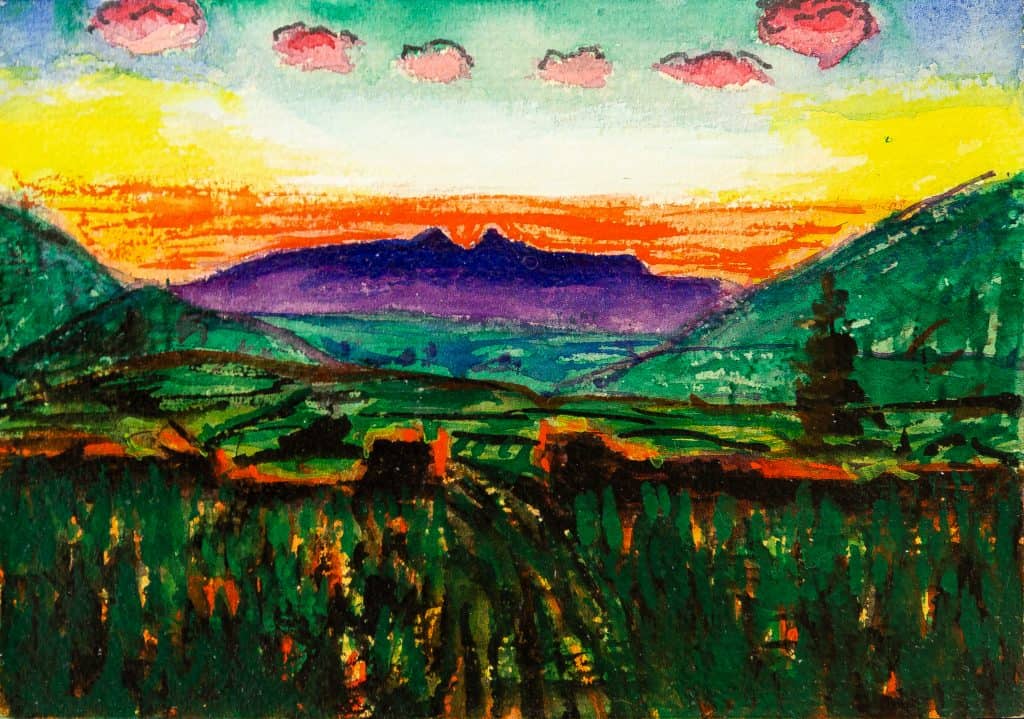
The painting presents a color-intensive, expressive depiction of a landscape. In the foreground, green meadows and fields spread out, structured by bold, short brushstrokes and dark lines. These lines lend depth and rhythm to the composition. In the center of the image, the landscape opens up to a purple-colored mountain massif that lies calm and monumental in the distance. Above it stretches an intense sky, glowing in vibrant shades of red, orange, and yellow, transitioning into cooler blue and violet nuances toward the top. Small pink clouds provide accents and enhance the lively, almost mystical mood of the sunset.
Here, Evard uses color not only to represent nature but as an independent means of expression. The strong contrasts between the warm sky and the cool foreground create a dynamic visual impact. At the same time, the surfaces and lines appear simplified and geometric, giving the work an abstract character.
The painting was created at a time when art was increasingly moving away from representationalism. André Evard (1876–1972), who is considered a precursor of Concrete Art, combined elements of Cubism, Expressionism, and Constructivism in his work. “Landscape with Purple Mountain” is exemplary of this fusion: it still shows a recognizable natural landscape but is already highly abstracted through its color harmony, composition, and structure.
With this work, Evard demonstrates his great interest in the effect of color and form. The landscape is not reproduced faithfully to nature but is condensed into a harmonious interplay of surfaces and tones. The painting unites emotional expressiveness with constructive order, reflecting the artistic development of the 1950s—the transition from expressive painting toward a more abstract, modern visual language.