



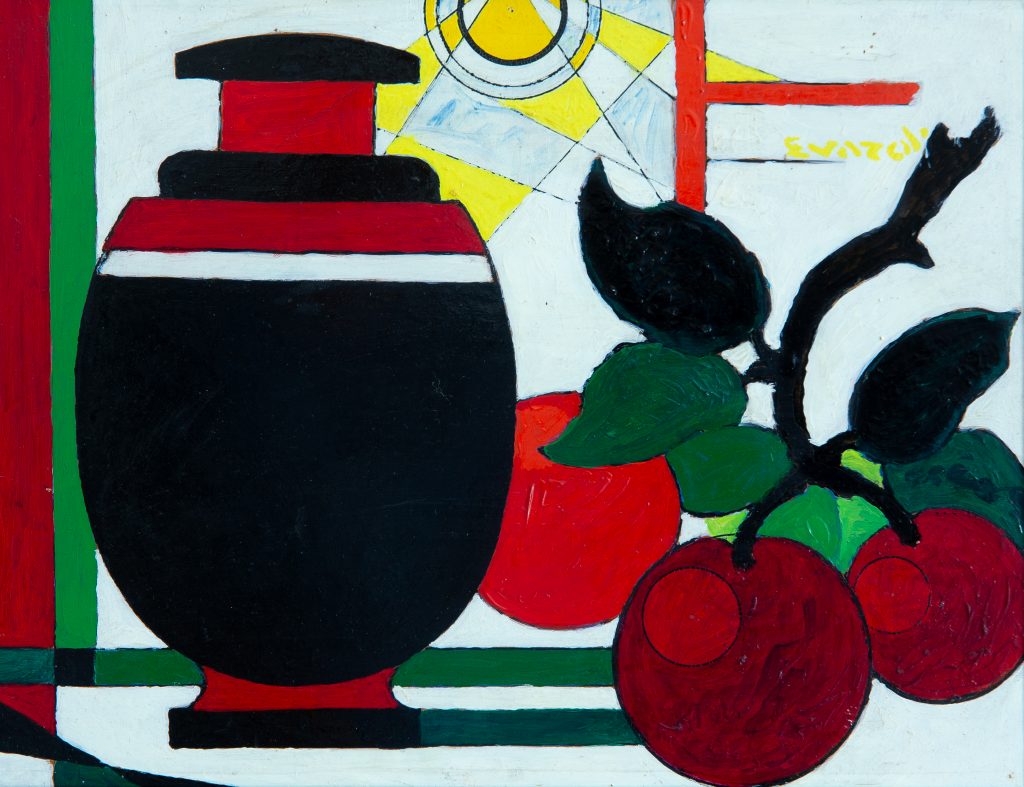
In this late still life, André Evard’s characteristic combination of constructive design language and reduced coloring is evident. The composition is clearly structured: a black vase and bright red apples are arranged in a frontal staggering that creates a subtle depth effect despite the flat painting style. The background is structured by geometric, constructive elements—lines, color fields, and an abstracted sun symbol—which transform the traditional still life into a modern, almost architectural order.
Evard reduces forms and colors to the essentials: the strong contrasts of black, red, green, and yellow give the painting a clear, rhythmic tension. Perspective is conceived not naturalistically, but compositionally—it results from the staggering and overlapping of the objects. The work illustrates Evard’s constructive painting style, which has existed since the 1920s and continued parallel to his figurative works even after 1950. Figurative motifs are increasingly translated into geometric structures without losing their symbolic meaning.